1
/
of
2
Fa engineering
DRIVE IN PALLET RACKS
DRIVE IN PALLET RACKS
Quantity
Couldn't load pickup availability
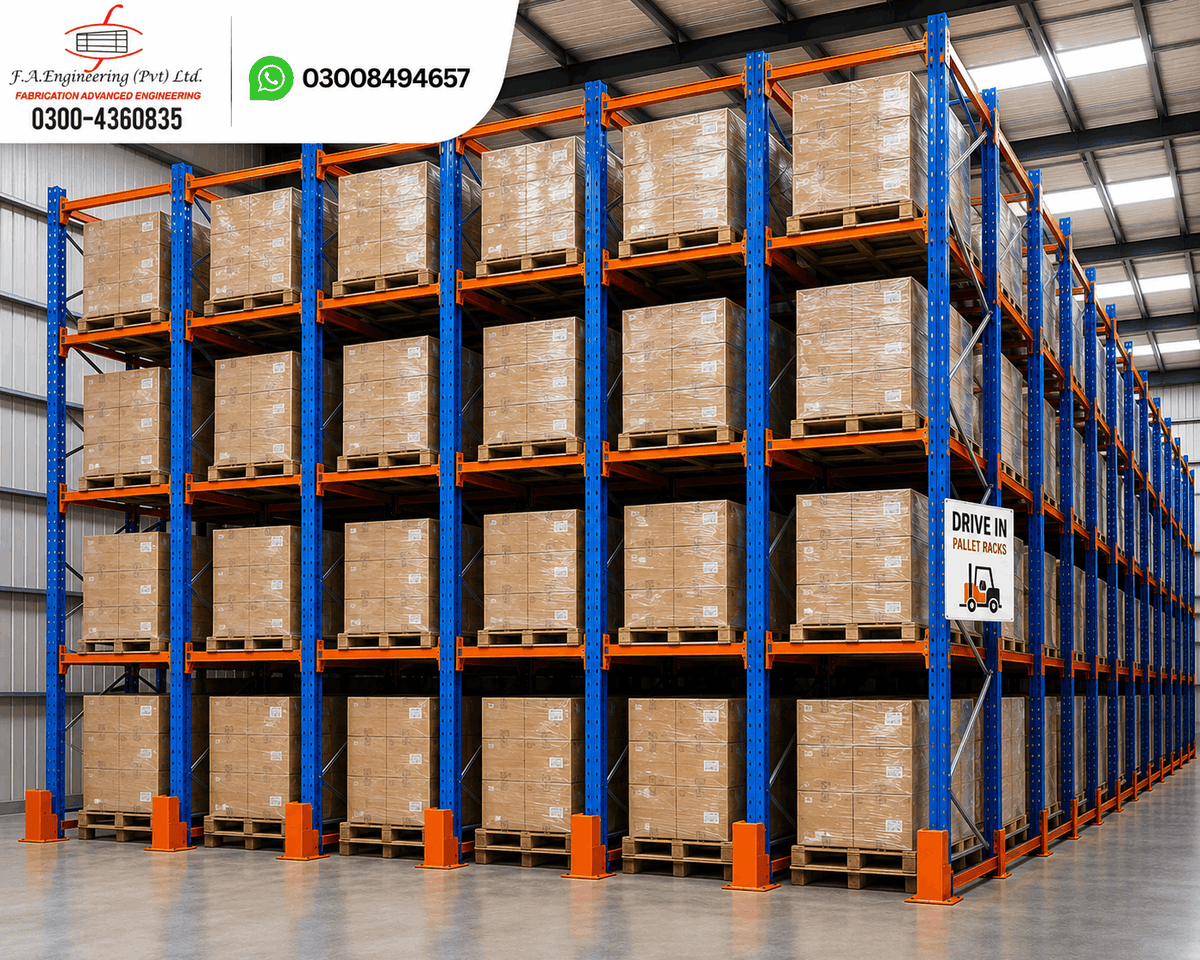
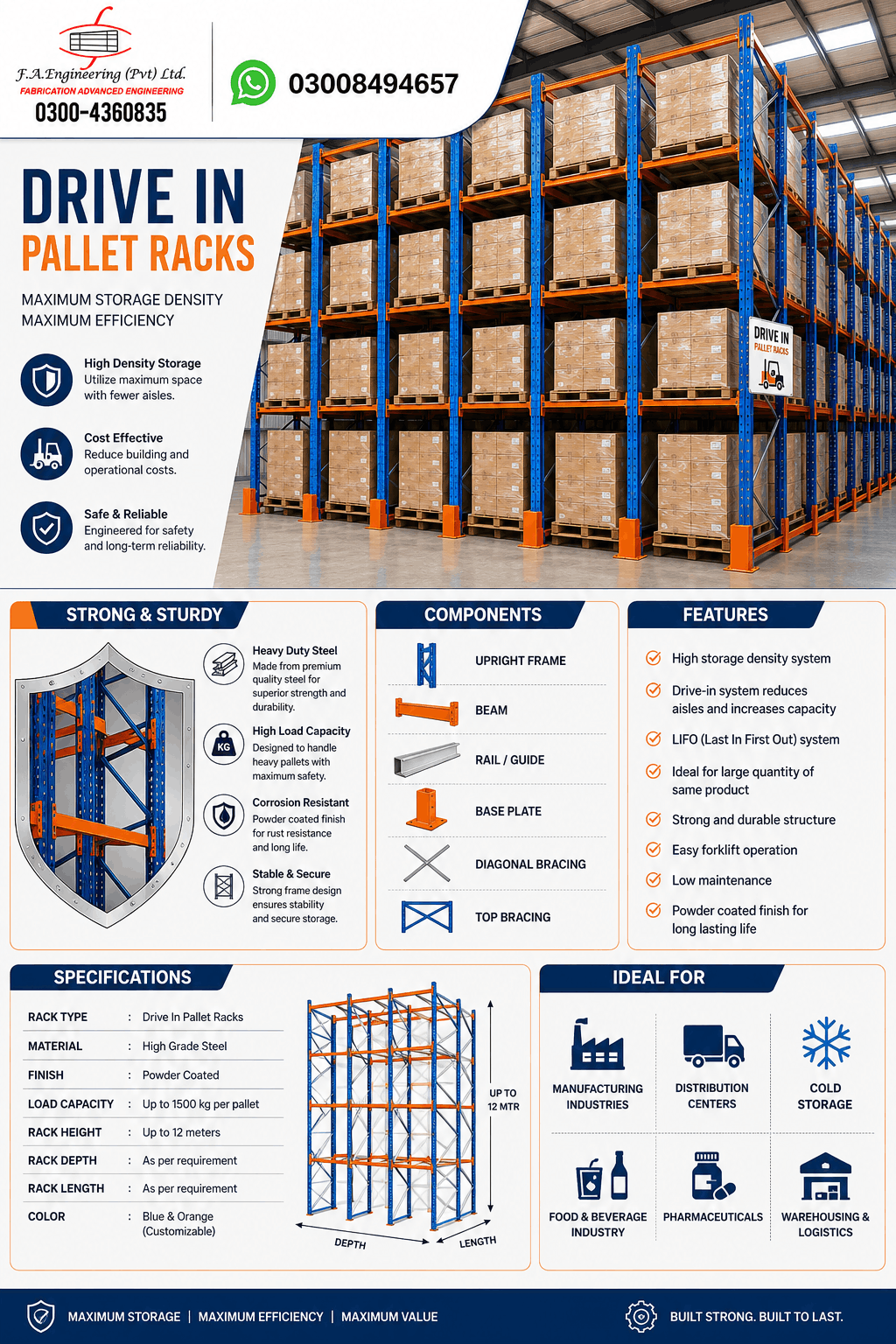
Drive-in pallet racks are a high-density storage system that allows forklifts to enter directly into the rack structure to load and unload pallets, rather than accessing them from a single aisle. Unlike selective racking, drive-in racks use continuous rails (rather than beams at every level) supported by frames on either side, creating storage lanes several pallets deep.
Key features:
- Space efficiency: Eliminates the need for individual aisles between every rack, significantly increasing storage density — ideal for warehouses with limited floor space.
- LIFO (Last-In, First-Out) or FIFO (First-In, First-Out): Drive-in systems typically operate on a LIFO basis (loaded and picked from the same side), while drive-through variants (open on both ends) allow FIFO.
- Best for uniform, bulk products: Works well for storing large quantities of the same SKU, such as seasonal goods, non-perishables, or products with slow turnover.
- Reduced aisle space: Since forklifts drive directly into the lanes, far fewer aisles are needed compared to selective racking.
Trade-offs:
- Slower pallet access since deeper-stored pallets require moving others first (in LIFO configurations).
- Less flexibility for SKU variety, since it's optimized for bulk, homogeneous storage.
- Requires precise forklift operation, as rails run along the sides of the lane close to the load.
Drive-in racking is commonly used in cold storage facilities, food and beverage warehouses, and distribution centers where maximizing cubic storage space matters more than rapid, selective access to individual pallets.
Share